Following the live webinar “Optimizing Executive Protection: What 3 Years of Data Reveals About Threats to VIPs,” hosted by Ontic and TorchStone Global on September 24, Ontic published this write-up of the findings. The session featured two TorchStone Global analysts, who walked through how threats to executives, high-net-worth individuals, and public figures are evolving, from…
By TorchStone SVP of Protective Intelligence Scott Stewart
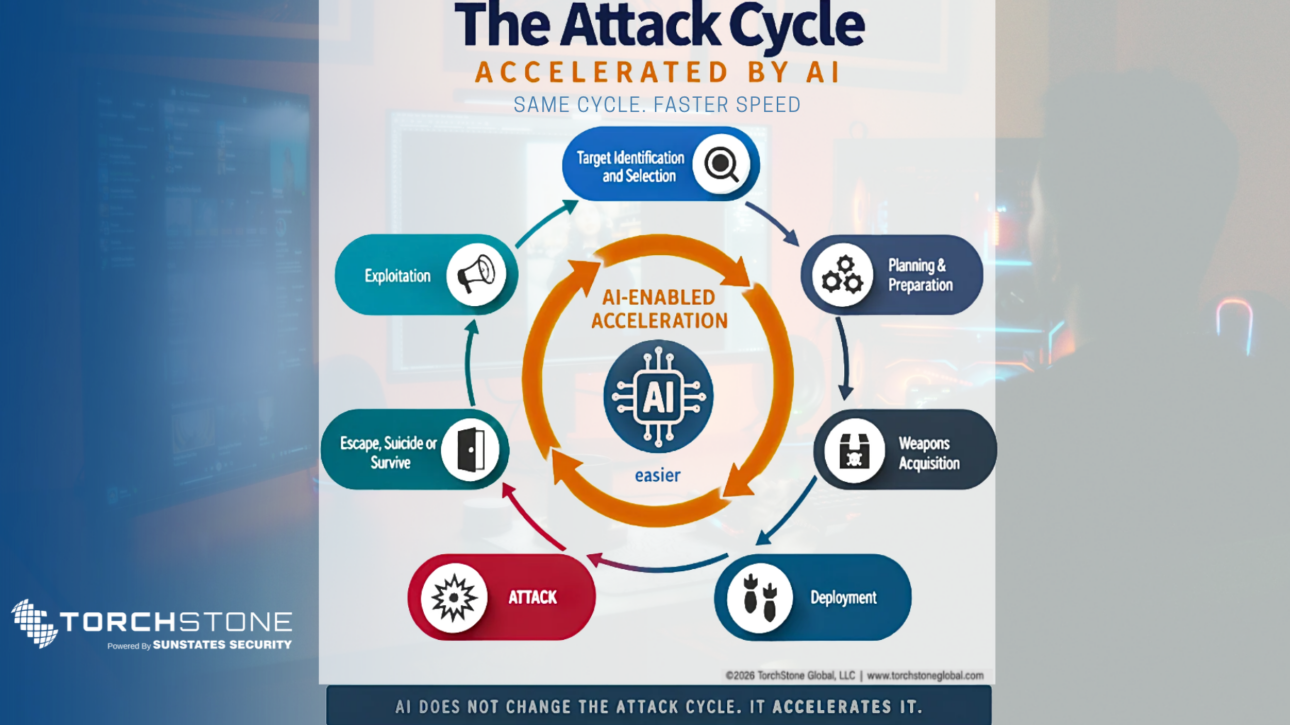
On October 19, 2026, my friend Chuck Randolph , the Chief Strategy Officer at 360 Privacy, wrote an interesting article that was published by SC Media discussing how AI tools are compressing the attack cycle . In the article, Chuck pointed out how AI…
Recent developments exemplify how AI’s expanding role in enhancing attacker capabilities has escalated the potential for harm even further, beyond assistive uses. Attackers are now using AI to generate functioning malware code to conduct cyber-attacks, creating yet another new vector in the ever-evolving threat landscape.
I recently read an assessment claiming the December 2024 murder of United Healthcare CEO Brian Thompson in New York was conducted using “advanced weaponry.” While the weapon used was a 3D printed 9mm “ghost Glock” with a 3D printed suppressor, it was anything but advanced.
Hybrid threats—blending physical and cyber domains—are not new, but technology has accelerated their scale and impact. By reducing digital exposure and adopting protective intelligence-led security programs, individuals and organizations can proactively mitigate these evolving risks.
Keep executive protection teams sharp by prioritizing continuous training that develops both mental and physical readiness, enabling professionals to prevent threats before they escalate. Unlike bodyguards who rely on intimidation, executive protection specialists apply intelligence, planning, and coordination to safeguard principals effectively.
The active shooter attack that took place on July 28 at a high-rise office building in Manhattan and killed five people (including the shooter) emphasized important lessons in responding to armed attacks. This analysis will study the attack itself, as well as what went right and what went wrong. While security measures in place and…
Companies and organizations face a multitude of different threats from insiders regarding the theft of intellectual property, trade secrets, and proprietary information. Expanding the thought process on how people evaluate and hunt insider threats is integral to stopping corporate espionage—whether a one-time event or a more insidious possibility.
Drone technology has changed dramatically since 2018, as evidenced by the massive proliferation of drones in the war in Ukraine and their deadly impact on the battlefield. It seems like an appropriate time to re-examine the terrorist drone threat. I also want to consider some of the implications of advancements in drone technology beyond terrorist…
Establishing an Executive Protection (EP) program for corporate executives requires delicate navigation. TorchStone has frequently encountered executives who decline protection, even when a threat assessment indicates protection is needed. The executives most often cite cost. Granted, corporate EP programs are not cheap—at least not good ones. But it is important to differentiate between cost and…
While a contagion effect spawning attacks against other executives did not occur in the days and weeks after the murder—we are witnessing a troubling surge of anti-capitalist and anti-corporate sentiment and vitriol that shows no sign of ebbing two months after United HealthCare CEO Brian Thompson’s death.
Police are currently searching for an individual who shot and killed United Healthcare CEO, Brian Thompson, the morning of Wednesday, December 4. According to preliminary information, the shooter waited outside the Hilton Hotel in Midtown Manhattan for at least 10 minutes before identifying and shooting Mr. Thompson several times in the chest.