Close
Close
While the United States observes Labor Day in September, many countries—and many U.S.-based activists—recognize May 1 as International Labor Day or “May Day.” This date often sees widespread demonstrations, labor strikes, and activist-led protests. Though typically peaceful, May Day actions can escalate into violence.
As of April 15, 2026, TorchStone is monitoring 63 planned protests on or around Friday, May 1, 2026. Protest themes this year are focused on Trump administration policies, including the ongoing U.S. conflict with Iran, general workers’ rights issues, immigration policy, and environmental activism. As such, organizations, particularly those operating internationally, should immediately assess potential risks and prepare appropriate response plans to mitigate disruption or exposure to unrest.
The first of May has been associated with large gatherings to celebrate the return of warm weather in the northern hemisphere for thousands of years. However, it began taking on a more confrontational tone in the late 19th century following the Haymarket incident in Chicago, IL. At least eight people died on May 4, 1886, when workers, anarchists, and police clashed outside McCormick Reaper Works during protests calling for an eight-hour workday. Five years later, in 1891, the Second International, an activist organization consisting of various communist and socialist groups around the world, declared May 1 the international day for the worker, thus sparking International Labor Day. To distance itself from communist influence and the violence associated with the roots of International Labor Day, the United States eventually adopted the first Monday in September as Labor Day.
In the modern era, May Day rallies still promote workers’ rights, largely including the right to unionize. However, the causes have expanded to include a broad spectrum of issues associated with the political left, such as immigration rights, anti-war, anti-capitalism, LGBTQ+ rights, environmental issues, and others.
While most May Day protests remain peaceful, there is a precedent of disruptions, property damage, and violence at these events dating back to the Haymarket incident in 1886. May Day protests have the potential to attract the involvement of Black Bloc protest tactics: smaller cells of more radicalized protesters, generally associated with the anarchist or antifa movements, who infiltrate peaceful protests intending to instigate violence. They typically dress in all black, tend to conceal their faces, and carry backpacks full of supplies such as incendiary devices, blunt weapons, and spray paint. The presence of Black Bloc elements at a May Day event greatly increases the likelihood of trouble ahead.
In recent years, protests have focused on rising living costs, cuts in social spending, and climate change. Listed below are examples of disruptive May Day protests from previous years.
In 2025, protests against government economic and immigration policies, particularly opposition to the Trump administration’s agenda, were dominant themes shaping May Day demonstrations. Other areas of focus were concerns about the rising costs of living, anti-war messaging related to the conflicts in Gaza and Ukraine, and climate justice.
In 2024, protesting the Israeli-Palestinian conflict in Gaza was the dominant demonstration theme. Student-led protests, which began in mid-April, grew more aggressive over the week of May 1, with incidents of violence and forceful occupation of university buildings.
In 2023, contentious legislative measures and labor union disruptions emerged as the primary drivers behind protest demonstrations.
May Day 2026
The map below highlights planned International Labor Day protests as of April 20. TorchStone anticipates dozens of additional events will be organized in the coming weeks, along with spontaneous demonstrations that will not be publicly announced.
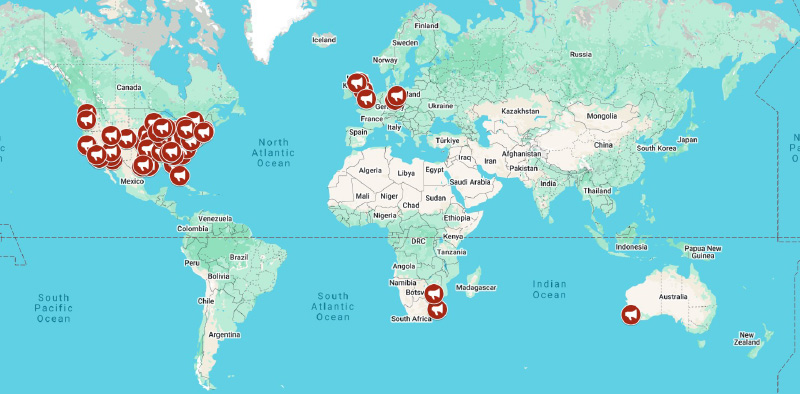
Protest activity related to perceived authoritative actions and government overreach has continued to surge in 2026. In the United States, the No Kings movement, which began in the summer of 2025, has continued to protest the actions and policies of the Trump administration. The third iteration of the No Kings protests occurred on March 28, 2026 where an estimated 8 million people attended events nationwide. The recent U.S. conflict with Iran has led to additional activity, despite a ceasefire currently in effect, protests continue. Events related to this war have also been detected internationally, including a demonstration in Tel Aviv on March 29 where at least 18 people were arrested.
In Europe, demonstrations against authoritarianism have been detected in Italy and Georgia, where participants have denounced authoritarian reforms and policies since the start of 2026. On 12 April, elections in Hungary ended the 16-year-long tenure of Prime Minister Viktor Orban in a surprising win for his opposition. His defeat has inspired pro-democracy rallies in Hungary that could spread throughout Europe as May Day approaches.
In the lead-up to May Day events and protests, activists and organizers are centering immigration policy as a key issue. Driven by opposition to intensified enforcement actions, reports of harsh detention conditions, and widely publicized incidents involving immigration authorities that many view as abusive or unjust. These concerns have pushed the movement beyond calls for reform and toward more assertive resistance. Activists, labor groups, and community organizations are linking immigration to workers’ rights and mobilizing strikes, boycotts, and mass demonstrations under May Day banners.
On International Labor Day, it can be expected that labor rights are a focus of activist groups. Activist groups and union organizations are focused on core demands such as higher wages, stronger union protections, and expanded worker benefits, while framing these issues within a broader fight against economic inequality. Striking, school walkouts, or boycotts are possible actions that these groups may encourage workers to participate in to demonstrate collective power. Also, labor rights are being linked with wider concerns such as immigration, public services, and democratic freedoms, reflecting a more expansive view of worker justice.
Economic issues are also taking center stage at this year’s May Day protests. Demonstrators are demanding higher wages, more affordable living costs, and higher taxes on the rich as they push for broader economic change. Major May Day protest organizer May Day Strong has made the theme of “workers over billionaires” its rallying cry for 2026. This protest campaign is of concern to high-net-worth individuals who may be increasingly viewed as symbolic targets amid rising anti-corporate sentiment.
Environmental activist groups are expected to remain a major part of the protest landscape in 2026. These activists target companies, financial institutions, and political figures who either oppose their goals outright or fail to enact climate-impact related changes swiftly. Climate change groups are also conducting protest actions on behalf of the pro-Palestine campaign, broadening their target set. As a result, protests outside government buildings and corporate offices, marches through streets, and disruptions of public events have become common.
Security professionals can prepare for May Day by first assessing the threat to their organization. Below are three key questions security professionals can ask themselves to determine if their organizations are at risk of being impacted by May Day protests.
For example, companies like Starbucks and Amazon have been specifically targeted by May Day protests in the past and are likely to be targeted again. Companies in the financial services and oil & gas industries are also common targets for protesters, who tend to oppose symbols of capitalism and blame oil & gas companies for environmental disasters and climate change. Companies linked to members of President Trump’s administration should expect to face elevated protest attention as well.
Other organizations may have no connection to protesters’ ideological agenda but are simply in the path of aggrieved participants. As such, convenience stores and retail chains that have outlets in heavily trafficked downtown areas are more likely to suffer property damage simply because of their proximity to protests.
After completing a threat assessment, security professionals should establish a plan to address the identified threats. Measures to consider include:
May Day protests rarely involve physical attacks on individuals, but when they do, attacks typically target law enforcement officers managing the demonstrations. Instead, protesters have historically aimed to embarrass organizations by confronting their executives with non-lethal tactics like throwing eggs or pies, or by provoking confrontations with employees to attract attention and support for their cause. Security professionals advise avoiding confrontations by using alternate entrances or closing targeted facilities when possible. Pre-planned days of action by activist groups, such as May Day, are great opportunities for security teams to review how they are keeping their principals safe during a time of possible disruptive protests.
Finally, protesters sometimes resort to dramatic tactics such as technical climbing and banner drops to criticize organizations, but these actions require careful planning and pre-operational surveillance that is vulnerable to detection by vigilant security personnel. If security is tight at a chosen target, protesters are more likely to select an alternate.
| May Day Events on or After May 1 | |
|---|---|
| Edinburgh, UK (May 2) | Minneapolis, MN (May 3) |
| Bethlehem, PA (May 2) | Glasgow, UK (May 3) |
| Leeds, UK (May 2) | London, UK (May 4) |
| Fremantle, Australia (May 3) | Toronto, Canada (May 4) |
| May Day Events on or After May 1 | |
| Asheville, NC | Mississauga, ON |
| Atlanta, GA | Memphis, TN |
| Austin, TX | Milwaukee, WI |
| Berlin, Germany | Naples, FL |
| Boston, MA | Nashville, TN |
| Buffalo, NY | Oceanside, CA |
| Charlotte, NC | Omaha, NE |
| Charlottesville, VA | Ottawa, Canada |
| Chattanooga, TN | Palo Alto, CA |
| Chicago, IL | Philadelphia, PA |
| Cleveland, OH | Pittsburgh, PA |
| Columbia, SC | Portland, OR |
| Dallas, TX | Providence, RI |
| Dayton, OH | Salt Lake City, UT |
| Denver, CO | San Antonio, TX |
| Detroit, MI | San Diego, CA |
| Durban, South Africa | San Jose, CA |
| Durham, NC | Seattle, WA |
| Flagstaff, AZ | Springfield, IL |
| Houston, TX | Syracuse, NY |
| Huntsville, AL | St. Louis, MO |
| Iowa City, IA | Tallahassee, FL |
| Kansas City, MO | Tempe, AZ |
| Knoxville, TN | Tucson, AZ |
| Leipzig, Germany | Tulsa, OK |
| Limpopo, South Africa | Washington, D.C. |
| Los Angeles, CA | Wichita, KS |
| Madison, WI | |